TMA may reduce diabetes and metabolic inflammation
Your diet, your microbiome and Diabetes

Fact Checked
×All the content published in our website is fact checked to validate its accuracy.
Visit our guidelines web page to learn more about our strict processes regarding how we review our content's sources: reliable and reputable journals, media websites, universities, colleges, organizations, and professionals.
Our articles are based on scientific evidence, and the references are included in their footnotes, which are clickable links to sound scientific papers.
First published: 27.Dec.2025
Overview
Research published a few weeks ago (Dec. 8, 2025) in Nature (Inhibition of IRAK4 by microbial trimethylamine blunts metabolic inflammation and ameliorates glycemic control) (1) reported that, in mice, a compound known as trimethylamine (or TMA), which is produced by the bacteria that live in the gut, helps reduce inflammation and insulin resistance in subjects with diet-induced obesity. It does so by acting upon a substance called interleukin-1 receptor-associated kinase 4 (IRAK4), blunting its response, which in turn helps boost immunity and improve metabolism in high-fat diets.
Finally, TMA is oxidized in the liver, becoming trimethylamine N-oxide or TMAO (it is also produced by some types of gut microbes), which has been linked to cardiovascular disease. So there is a delicate balance between TMAO and TMA.
In this Article (Index)
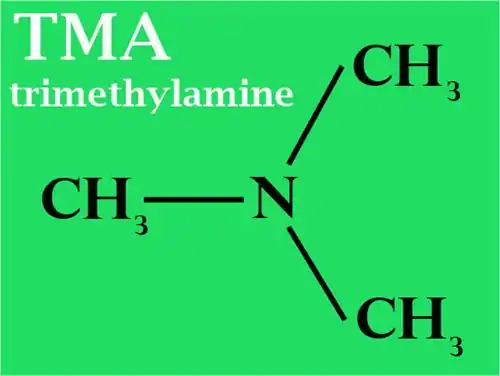
TMA - Trimethylamine
Many studies have shown that insulin resistance is becoming more frequent due to our sedentary lifestyle and high-fat diet (processed and ultraprocessed foods) that lead to obesity, a trigger of insulin resistance, which in turn is a risk factor for developing type-2 diabetes. High-fat diets harm the gut microbiome and also provoke low-grade inflammation.
The gut bacteria break down the food we ingest, and the byproducts of this process are known as metabolites. The bacteria in the intestine transform dietary choline, carnitine, and phosphatidylcholine into trimethylamine (TMA). Most of the TMA is then oxidized to trimethylamine N-oxide (TMAO) in the liver. This study focused on the role of TMA in insulin resistance and its other health effects.
The authors fed mice a regular diet or a high-fat diet (HFD). Some of the mice on the HFD were supplemented with high doses of choline (which would lead to a higher bacterial output of TMA), and they showed improved insulin resistance and less inflammation than those on a low-choline HFD. When the mice received antibiotics to eliminate the TMA-producing bacteria, they lost the improvements and reverted to higher insulin resistance and inflammation. When the mice received TMA supplementation, the benefits returned.
These clues reveal that TMA plays a significant role and improves insulin resistance and metabolic inflammation even in obese mice eating a high-fat diet.
The role of IRAK-4
Interleukin-1 receptor-associated kinase 4, or IRAK-4, is a protein with a key role in immunity. It helps the body recognize bacterial infections and triggers the inflammatory response to fight infection by launching the production of pro-inflammatory cytokines.
This study showed that TMA inhibits IRAK-4; this means that it reduces its reactivity and effectiveness, blunting its pro-inflammatory response.
TMA is a kinase inhibitor controlling IRAK4, a central kinase involved in innate immunity, is a major finding that provides an attractive mechanism for the metabolic and immune improvements observed with choline supplementation in HFD contexts. Chilloux, J., Brial, F., Everard, A. et al. (2025) (1)
The authors suggest that the TMA → IRAK-4 mechanism can help explain the beneficial effects of choline supplementation on patients with non-alcoholic fatty liver disease. It can also clarifies why people consuming a higher quantity of dietary choline have a better insulin resistance profile (2)
TMAO is not the bad guy
The authors are surprised that TMA has such potent positive effects while its oxidized metabolite, TMAO, is linked to cardiovascular disease (CVD), especially in patients with atherosclerosis and thrombosis.
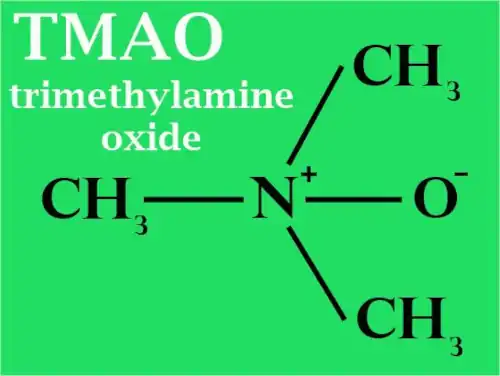
They also point out that TMAO's effects on heart health have been found to range from protective to minimal to harmful. Several studies involving healthy adults show that TMAO is not detrimental by itself; it requires an underlying health condition to become apparent.
Since TMA reduces insulin resistance, which is a known risk factor for cardiovascular disease, TMA could have a protective effect against CVD.
The transformation of dietary choline (for example, the choline in eggs) into TMA depends on the type of gut microbiota of each individual, and to make things even more complex, these microbes are influenced by the type of diet that each person eats.
Furthermore, the gut microbiome also produces TMAO.
Vegans and vegetarians have been reported to have lower TMAO than meat eaters.
A diet based on processed foods may have a negative impact, as they contain lecithin, which is added as an emulsifying agent in gravies, salad dressings, soups, mayonnaise, ice creams, and margarine, just to mention a few. Lecithin is metabolized into TMA and TMAO.
Interestingly, eating red meat (but not white meat) increases TMAO, which in this case is produced by the gut microbiome from L-carnitine, but not from the choline found in it.
Studies have shown that " egg consumption is considered not to associate with plasma levels of TMAO, ... plasma TMAO concentration is more strongly affected by intraindividual variation, probably reflecting the difference in gut microbiota composition." (3)
Research conducted in 2024 (4) using Mendelian randomization found that different kinds of gut bacteria are responsible for an increased or decreased output of TMAO: " Our findings revealed the role of the phylum Pseudomonadota, family Sutterellaceae, species Bacteroides finegoldii, and Bacteroides uniformis in increasing TMAO, as well as the species Bacteroides thetaiotaomicron and Bilophila wadsworthia in decreasing TMAO. This study provides new insights into the relationship between the gut microbiome and TMAO levels."
Probably, gut microbiome alterations (dysbiosis) caused by an unhealthy diet (high in fats, processed foods, and low in prebiotics and probiotics, fiber, and plant-based foods) could play a role in the TMA-TMAO balance.
Main Findings
The study in mice found that despite diet-induced obesity, TMA had positive effects:
- TMA improved insunlin resistance
- TMA reduced inflammation
- TMA's oxidized form, TMAO has negative cardiovascular effects, but these may not affect healthy people.
References and Further Reading
(1) Chilloux, J., Brial, F., Everard, A. et al. (2025), Inhibition of IRAK4 by microbial trimethylamine blunts metabolic inflammation and ameliorates glycemic control. Nat Metab 7, 2531–2547 (2025). https://doi.org/10.1038/s42255-025-01413-8
(2) Gao X, Wang Y, Sun G. (2016). High dietary choline and betaine intake is associated with low insulin resistance in the Newfoundland population. Nutrition. 2017 Jan;33:28-34. doi: 10.1016/j.nut.2016.08.005. Epub 2016 Sep 7. PMID: 27908547.
(3) Sugano M, Matsuoka R., (2020). Nutritional Viewpoints on Eggs and Cholesterol. Foods. 2021 Feb 25;10(3):494. doi: 10.3390/foods10030494. PMID: 33669005
(4) Yu Yunfeng et al. (2024). Unveiling the causal effects of gut microbiome on trimethylamine N-oxide: evidence from Mendelian randomization. Frontiers in Microbiology, vol. 15, doi:10.3389/fmicb.2024.1465455
About this Article
TMA may reduce diabetes and metabolic inflammation, A. Whittall
©2025 Fit-and-Well.com. First Published: 27.Dec.2025. Update scheduled for 27.Dec.2028. https://www.fit-and-well.com/fitness/TMA-could-reduce-diabetes-risk.html
Tags: TMA, TMAO, choline, trimethylamine, inflammation, diabetes